Mastering Your Message: A Guide to Business Branding Solutions
Why Your Brand Is More Than a Logo
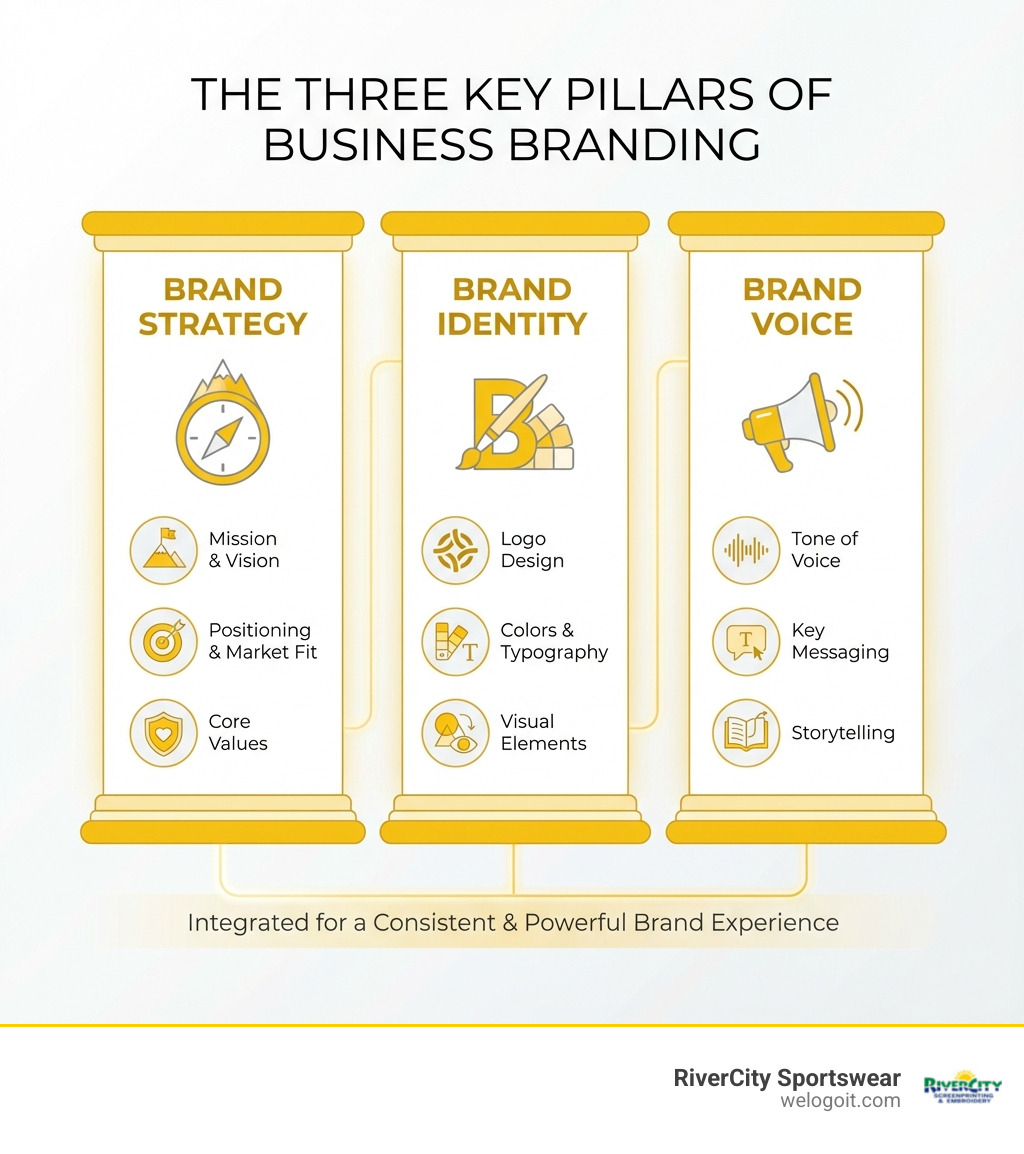
Business branding solutions encompass everything from your visual identity and messaging to customer experience and promotional materials. They help you build trust, stand out from competitors, and create lasting connections with your target audience. Here’s what effective business branding solutions include:
- Brand Strategy – Your mission, values, and positioning
- Visual Identity – Logo, colors, typography, and design elements
- Brand Voice – How you communicate across all channels
- Tangible Assets – Branded merchandise, packaging, and promotional products
- Digital Presence – Website, social media, and content marketing
Your brand isn’t just what you say about your business—it’s what your customers feel when they interact with you. It’s the promise you make and the experience you deliver, whether someone visits your website, receives a promotional t-shirt, or unboxes a product with your logo on it. A strong brand creates an emotional connection that turns first-time buyers into loyal advocates.
The numbers back this up: consistent branding can lift revenue by 23%. Yet many businesses still treat branding as an afterthought—a quick logo slapped on a business card—rather than the strategic asset it truly is.
This guide breaks down the core components of business branding solutions and shows you how to build, implement, and measure a brand that drives real growth. Whether you’re a startup working with a tight budget or an established company looking to refresh your identity, you’ll find actionable strategies for every stage.
I’m Luke Sanders, CEO of RiverCity Sportswear, where we’ve helped thousands of Texas businesses bring their brands to life through custom apparel and promotional products for over 40 years. Throughout my 15+ years leading the company, I’ve seen how the right business branding solutions—from branded uniforms that build team culture to promotional products that turn customers into ambassadors—can transform a company’s market presence and bottom line.
Business branding solutions further reading:
The Core Components of a Powerful Brand
Think of your brand as a person. Just like people, brands have a personality, a way they look, and a way they speak. These elements, when working together seamlessly, form the core components of a powerful brand. They are the foundation upon which all your business branding solutions are built, creating a cohesive experience for everyone who interacts with your company. After all, 88% of consumers are drawn to brands for their authenticity, so being genuine and consistent in our branding is paramount.
Brand Strategy: The “Why” Behind Your Brand
Before you decide on a logo or a catchy slogan, you need to understand why your business exists. This is your brand strategy – the blueprint that defines your purpose, mission, and vision. It’s about answering fundamental questions: What problem do we solve? What do we stand for? Where are we headed?
Our brand strategy helps us identify our target audience and understand their needs and pain points. We craft a customer profile, detailing who we’re trying to reach. Then, we position ourselves in the market, highlighting our competitive advantage and defining our Unique Value Proposition (UVP). This UVP isn’t just a fancy phrase; it’s the core reason customers should choose us over anyone else. It’s the “secret sauce” that makes us, well, us.
Brand Identity: The “What” People See and Feel
If brand strategy is the brain, brand identity is the face. This is where the visual magic happens. Our visual identity includes everything people see: our logo design, the color palette we use, our typography (the fonts that communicate our message), and the style of our imagery and photography. Even the iconography (the small symbols we use) plays a part.
A strong visual identity makes us instantly recognizable and memorable. It evokes emotions and helps our audience connect with our brand on a deeper level. For example, certain colors can convey trust, energy, or sophistication. Our logo isn’t just an image; it’s a symbol of our entire brand promise. It’s crucial that these visual elements are consistent across every touchpoint, from our website to the custom apparel we produce. We understand that visual branding plays a significant role in revenue growth, so we invest in making ours impactful.
It’s important to distinguish brand identity from brand image. Our brand identity is what we create and project, while our brand image is what customers perceive. We aim for these to be aligned through consistent effort.
Brand Voice and Messaging: The “How” You Communicate
Our brand voice is our personality in written and spoken form. It dictates the tone of voice we use in all our communications – whether it’s friendly, authoritative, witty, or empathetic. Developing a consistent brand voice ensures that every message we put out sounds unmistakably like us.
This consistency extends to our storytelling. A compelling brand narrative—our origin story, our mission, our values—humanizes our business and fosters an emotional connection with our audience. We craft taglines that are memorable and key messaging pillars that clearly articulate what we do, how we do it, and why it matters. This narrative isn’t just for marketing; it’s woven into every interaction, making our brand relatable and authentic.
Strategic Business Branding Solutions for Growth
Once we understand the core components, we can explore the various business branding solutions available to bring our brand to life and fuel our growth. These solutions can range from in-house efforts to partnering with agencies or utilizing DIY tools. The right mix depends on our size, budget, and specific goals. What works for a startup in San Marcos might differ from a large corporation in Austin, but the underlying principles of consistency and impact remain the same.
Foundational Branding for Startups and Small Businesses
We know that for many startups and small businesses in Central Texas, every dollar counts. But that doesn’t mean branding has to take a backseat. We can develop a strong brand identity on a budget by focusing on smart, low-cost strategies.
- Define Your Essentials: Start with the absolute necessities: a clear, memorable logo, professional business cards, and a basic but functional website. These are our fundamental identity markers.
- DIY Design Tools: User-friendly online platforms offer tools for logo creation and design, allowing us to create professional-looking assets without hiring a full-time designer. These tools often provide customizable templates for business cards, flyers, and social media graphics.
- Guerrilla Marketing: This involves creative, unconventional, and often low-cost tactics to grab attention. Think sticker-bombing in relevant areas (with permission, of course!), sidewalk chalk art, or engaging flash mobs. The goal is to create buzz and make a big impression without breaking the bank.
- Content Marketing: Establishing ourselves as subject matter experts through valuable content (blog posts, short videos, how-to guides) costs time, not necessarily money. This builds trust and positions us as an authority in our field.
- Partnerships: Collaborating with complementary local businesses in Austin or San Marcos can be a win-win. We can co-host events, cross-promote each other’s services, or bundle products, leveraging each other’s audiences.
- Freelance Talent: For specific design needs, hiring a freelance graphic designer or copywriter for a project can be more budget-friendly than a full agency, offering professional results without the overhead.
- Community Building: Engaging with our local community, both online and offline, builds trust and loyalty. This could involve interacting on social media, encouraging user-generated content, or sponsoring local events. We’ve seen how much local businesses in South Texas appreciate this authentic approach.
Tangible Business Branding Solutions: Merchandise and Packaging
This is an area we know intimately at RiverCity Sportswear, and it’s where business branding solutions become truly tactile and memorable. Promotional products, branded apparel, and custom packaging turn our customers into brand ambassadors and help us build a strong company culture.
- Promotional Products: These are the unsung heroes of branding. Items like custom keychains, pens, tumblers, or tote bags, often given away at trade shows or as gifts with purchase, keep our brand top-of-mind. They provide utility to the recipient while consistently exposing them to our logo and message. We’ve seen businesses in Central Texas effectively use these to expand their product line and market their brand to a wider audience.
- Branded Apparel and Custom Uniforms: There’s nothing quite like seeing our team members in branded shirts or uniforms. It fosters a sense of unity, professionalism, and pride among employees. For customers, it creates a consistent and trustworthy image. From t-shirts to hats, custom screen printing allows us to create high-quality, comfortable apparel that our team loves to wear and our customers love to see.
- Custom Packaging: The unboxing experience has become a marketing event in itself. Custom packaging—branded shipping boxes, mailer bags, or even branded tissue paper—adds a touch of delight and reinforces our brand’s attention to detail. It protects our products and creates a memorable moment that customers might even share on social media, extending our brand’s reach.
- Turning Customers into Brand Ambassadors: When we give customers a cool branded t-shirt or a useful promotional item, they become walking billboards for our business. They’re not just using a product; they’re showing their affiliation and spreading the word organically. This is word-of-mouth marketing at its finest, driven by tangible business branding solutions.
Digital Branding Solutions for the Modern Market
In today’s interconnected world, our digital presence is just as critical as our physical one. Modern business branding solutions must include a robust digital strategy to reach and engage our audience effectively.
- Website Design and User Experience (UX): Our website is often the first place potential customers look us up. It needs to be visually appealing, easy to steer, and reflect our brand identity perfectly. A seamless User Experience (UX) ensures visitors can find what they need quickly, reinforcing a positive brand image.
- Search Engine Optimization (SEO): We want our brand to be found when people are searching for solutions we offer. SEO ensures our website ranks high in search results, increasing visibility and driving organic traffic. This is a subtle but powerful way to build brand awareness.
- Content Marketing: We create valuable content – blog posts, videos, infographics – that educates, entertains, or inspires our audience. This not only establishes our expertise but also provides opportunities for our brand voice to shine through, building trust and engagement.
- Social Media Presence: Social media platforms are where our audience lives, works, and plays. A consistent and engaging social media presence allows us to interact directly with customers, share our brand story, and build a community around our values. It’s a dynamic way to reinforce our brand personality.
- Email Marketing: Building an email list and sending out valuable newsletters or promotional offers allows for direct, personalized communication. This helps nurture leads and build long-term customer relationships, keeping our brand top-of-mind.
- Consistency Across All Digital Touchpoints: Just as with our physical assets, consistency is key across all our digital touchpoints. Our logo, colors, fonts, and brand voice should be uniform on our website, social media profiles, email campaigns, and online ads. This creates a cohesive and professional brand experience that builds credibility and recognition.
Building and Implementing Your Brand Strategy Step-by-Step
Building a strong brand isn’t a one-time event; it’s an ongoing journey, a marathon, not a sprint. We need an actionable framework to guide us from concept to execution, ensuring our business branding solutions are thoughtfully implemented and consistently maintained.
Step 1: Research and Findy
Before we lay a single brick, we must understand the ground we’re building on. This findy phase is crucial for any effective branding project.
- Market Research: We dive deep into the market landscape, identifying trends, opportunities, and potential challenges. What does our target audience truly need? What are their aspirations, and how can our brand align with them?
- Competitor Analysis: We study our competitors in Austin, San Marcos, and across Texas. What do they do well? Where are their weaknesses? More importantly, what makes us different? This helps us identify our “onlyness”—that unique space we can own in the market.
- Customer Surveys and Focus Groups: We talk to our customers! Their feedback is invaluable. We ask about their perceptions of our brand, their needs, and their pain points. This qualitative data gives us insights that numbers alone can’t.
- Internal Stakeholder Interviews: We speak with our team members, from leadership to frontline staff. Their perspectives on our company culture, values, and mission are vital for building an authentic brand from the inside out.
Step 2: Define Your Brand Identity and Create a Style Guide
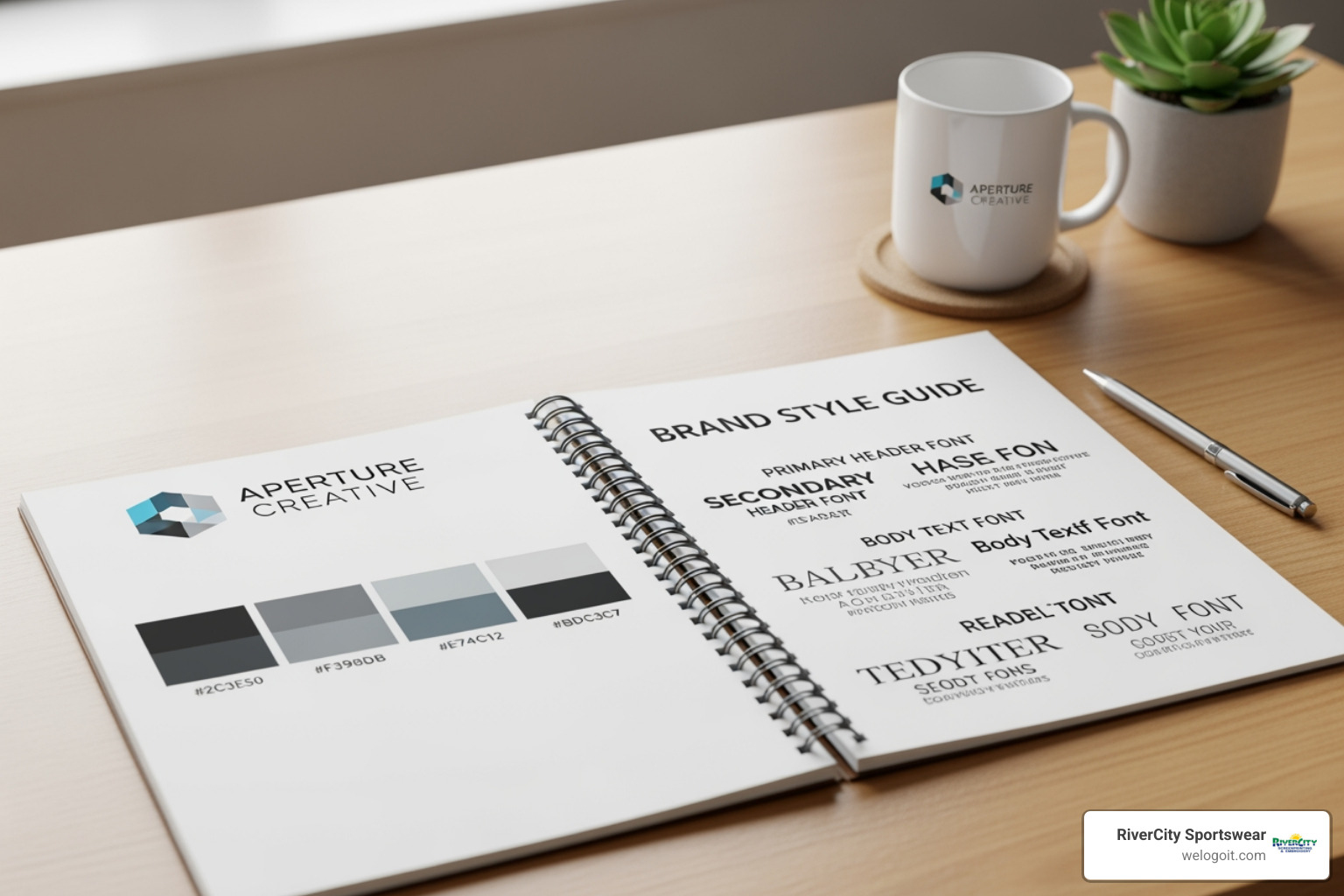
Once we’ve gathered all our insights, it’s time to codify our brand. This is where our brand identity takes shape, and we create the essential document that will guide all future brand applications: the brand style guide.
- Documenting Our Brand: We articulate our brand’s purpose, mission, vision, and core values. We define our unique selling proposition and our brand personality. Is our brand friendly, innovative, traditional, or daring?
- Visual Elements: We finalize our logo, ensuring it’s versatile and impactful. We select our primary and secondary color palettes, specifying their HEX and RGB codes for consistent digital and print use. We choose our primary and secondary fonts (typography), defining their hierarchy and usage.
- Voice and Tone Guidelines: This section outlines how our brand “speaks.” We define our tone (e.g., informative, encouraging, humorous), specific phrases to use or avoid, and guidelines for different communication channels (e.g., social media vs. formal proposals).
- Messaging Framework: We develop key messaging pillars that consistently communicate our value proposition and brand story across all platforms.
- Logo Usage Rules: Our style guide includes clear rules on how our logo should be used, including minimum size, clear space around it, and incorrect usage examples. This prevents our logo from being distorted or misused, maintaining its integrity.
Step 3: Execute with Consistency
A beautifully designed brand strategy and style guide are only effective if they are consistently applied. This step is about rolling out our new or refreshed brand and ensuring everyone is on board.
- Rolling Out the Brand: This involves updating all our existing assets. Think about our website, social media profiles, email signatures, marketing collateral (brochures, flyers), and of course, our product packaging and branded merchandise.
- Internal Training and Employee Advocacy: Our employees are our most powerful brand ambassadors. We train them on our brand guidelines, ensuring they understand our brand story, voice, and visual identity. When our team lives and breathes the brand, it naturally translates to an authentic customer experience.
- Updating All Assets: This is a comprehensive task. We review every single touchpoint where our brand appears:
- Website: New logos, color schemes, fonts, and updated content reflecting our brand voice.
- Social Profiles: Consistent profile pictures, banners, and content.
- Marketing Collateral: Business cards, letterheads, brochures, and any printed materials.
- Packaging: Branded boxes, labels, and inserts.
- Promotional Products and Apparel: Ensuring all new merchandise, like custom t-shirts or mugs, adheres to the new guidelines.
- The Power of Consistency: We know that 90% of consumers expect the same quality across channels. This isn’t just about product quality; it’s about brand quality. Consistent branding builds trust, familiarity, and recognition. It makes us look professional and reliable, reinforcing our brand promise every single time.
Measuring the ROI of Your Branding Efforts
Investing in business branding solutions is a strategic decision, and like any investment, we need to track its success. Measuring the Return on Investment (ROI) of our branding initiatives helps us justify our efforts, make data-driven decisions, and continuously refine our strategy.
Key Metrics to Track
We look at a combination of quantitative and qualitative metrics to get a holistic view of our brand’s performance.
- Brand Awareness Metrics: These tell us how many people know about us.
- Social Mentions: How often is our brand mentioned on social media? Tools help us track this.
- Website Traffic: An increase in direct traffic (people typing our URL) suggests growing brand recognition.
- Search Volume: Are more people searching for our brand name directly?
- Engagement Metrics: These show how much people interact with our brand.
- Social Media Engagement: Likes, shares, comments, and saves on our posts.
- Content Shares: How often is our blog content or videos shared?
- Email Open Rates and Click-Through Rates: Are our subscribers engaging with our emails?
- Conversion Metrics: Branding should lead to business growth.
- Lead Generation: Is our branding attracting more qualified leads?
- Customer Lifetime Value (CLV): Do customers acquired through strong branding stay longer and spend more?
- Sales Revenue: Are we seeing an increase in sales directly attributable to our branding efforts?
- Brand Equity: This is a more abstract measure but refers to the value a brand adds to a product or service. Strong brand equity can lead to premium pricing and customer loyalty.
Here are our top 5 branding KPIs for businesses like ours in Texas:
- Brand Recognition: How easily customers identify our brand.
- Brand Loyalty: The percentage of repeat customers and brand advocates.
- Brand Engagement: Interactions across digital and physical touchpoints.
- Customer Perception: What customers think and feel about our brand (often through surveys).
- Market Share: Our brand’s slice of the overall market.
Tools and Techniques for Measurement
To track these metrics, we leverage a variety of tools and techniques:
- Google Analytics: Essential for tracking website traffic, user behavior, and conversion goals.
- Social Media Analytics: Most platforms (Facebook, Instagram, LinkedIn) offer built-in analytics to measure reach, engagement, and audience demographics.
- SEO Tools: Tools like SEMrush or Ahrefs help us monitor keyword rankings, organic traffic, and competitor performance.
- Customer Surveys (NPS, CSAT): Net Promoter Score (NPS) measures customer loyalty, while Customer Satisfaction (CSAT) surveys gauge immediate satisfaction. These are critical for understanding brand perception.
- Brand Perception Studies: More in-depth qualitative research, often involving focus groups or interviews, to understand how our brand is perceived in the market.
- Social Listening Tools: These platforms allow us to monitor online conversations about our brand, industry, and competitors, helping us understand sentiment and identify trends.
Frequently Asked Questions about Business Branding
We often hear similar questions from businesses in San Marcos, Austin, and across Texas. Let’s tackle some of the most common ones about business branding solutions.
How much should a small business spend on branding?
This is the million-dollar question, and the honest answer is: it varies. There’s no one-size-fits-all budget. However, we can look at industry benchmarks. Marketing budgets average 8.8% of revenue across companies. For early-stage startups, it’s common to spend 8-15% of their marketing or operating budget on branding, sometimes even more if they’re in a high-growth phase or preparing for investor rounds.
For small businesses, it’s often about a phased investment. We recommend starting lean, focusing on foundational elements like a strong logo and consistent messaging. As the business grows and generates more revenue, we can then invest more in comprehensive business branding solutions, such as professional website design, extensive promotional campaigns, or a full rebrand. Smart branding isn’t about spending the most; it’s about spending effectively.
What is the difference between branding and marketing?
This is a classic! Think of it this way:
- Branding is who you are. It’s your identity, your personality, your values, and your promise. It’s the strategic foundation that defines what your business stands for and how it wants to be perceived. When we talk about brand strategy, identity, and voice, we’re talking about branding.
- Marketing is how you build awareness and drive action. It’s the tactical process of promoting your products or services, communicating your brand message, and engaging with your target audience. This includes advertising, social media campaigns, content creation, and sales promotions.
Branding is the foundation, the essence, the core of your business. Marketing is the house you build on that foundation, designed to attract people inside. You can’t effectively market without a clear brand, just like you can’t build a stable house without a strong foundation. They are distinct but deeply intertwined.
How long does it take to build a strong brand?
Building a strong brand is definitely not a one-time project; it’s an ongoing journey. It’s like nurturing a relationship – it requires continuous effort, consistency, and adaptation. We often refer to the 3-7-27 rule: it takes 3 exposures for recognition, 7 for familiarity, and 27 to build trust.
This rule highlights why consistency over time is absolutely key. You can’t expect immediate results. A brand isn’t built overnight with a single logo launch. It’s built through every customer interaction, every piece of content, every promotional product, and every consistent message over months and years. It takes time to permeate the market, build an emotional connection, and earn that coveted customer trust. But rest assured, the long-term rewards are well worth the patience and persistence.
Conclusion
In wrapping up, it’s clear that business branding solutions are far more than just aesthetics; they are a strategic investment in the future of our company. We’ve explored the core components—brand strategy, identity, and voice—and digd into practical solutions for businesses of all sizes, from budget-friendly tactics for startups to the tangible impact of merchandise and the necessity of a strong digital presence. We’ve also highlighted the importance of a step-by-step implementation process and the critical need to measure our efforts to ensure a strong ROI.
A strong brand is, without a doubt, our most valuable asset. It builds trust, fosters loyalty, differentiates us in a crowded market, and ultimately drives growth. At RiverCity Sportswear, we’ve spent over 40 years helping businesses across Austin, San Marcos, and the wider Central and South Texas regions bring their brands to life. Whether it’s through custom screen printing for employee uniforms or promotional merchandise that turns customers into passionate advocates, we understand the power of tangible branding.
Ready to create a lasting impression? Explore our custom promotional products in Austin to lift your brand.
Original Post: Mastering Your Message: A Guide to Business Branding Solutions


Comments
Post a Comment